

Introduction
On exam day, getting to the venue on time is part of the challenge. Knowing your ATMA test centre and how to reach it helps you plan when to leave and which documents to bring.
For ATMA candidates, the preferred exam city and the confirmed centre are not the same thing. Exam city selection during registration does not tell you which building or entrance to use. Check your latest official exam information, including your admit card and any centre instructions, for the final details. Your ATMA test centre is confirmed through the official centre allotment, not simply by choosing a city.
Plan your journey as part of your exam preparation. An easy-looking route may involve unfamiliar roads, transfers, parking or a walk to the venue. Checking these details in advance helps you save time and focus on the exam. Include exam-day travel in your preparation once you know the location of your ATMA test centre.
Plan for the journey
The main risk is uncertainty. An unclear address, a late departure or an assumption about your centre can turn a straightforward trip into a stressful one. Planning ahead means fewer decisions to make on exam morning. Confirming your ATMA test centre early gives you time to resolve questions about the address or route.
Keep three details separate: the city you selected during registration, the centre assigned to you later and the specific test venue listed in your official documents. The city gives you the general location; the allotment and venue details tell you where to report. Check your ATMA test centre details against the latest official information before making travel arrangements.
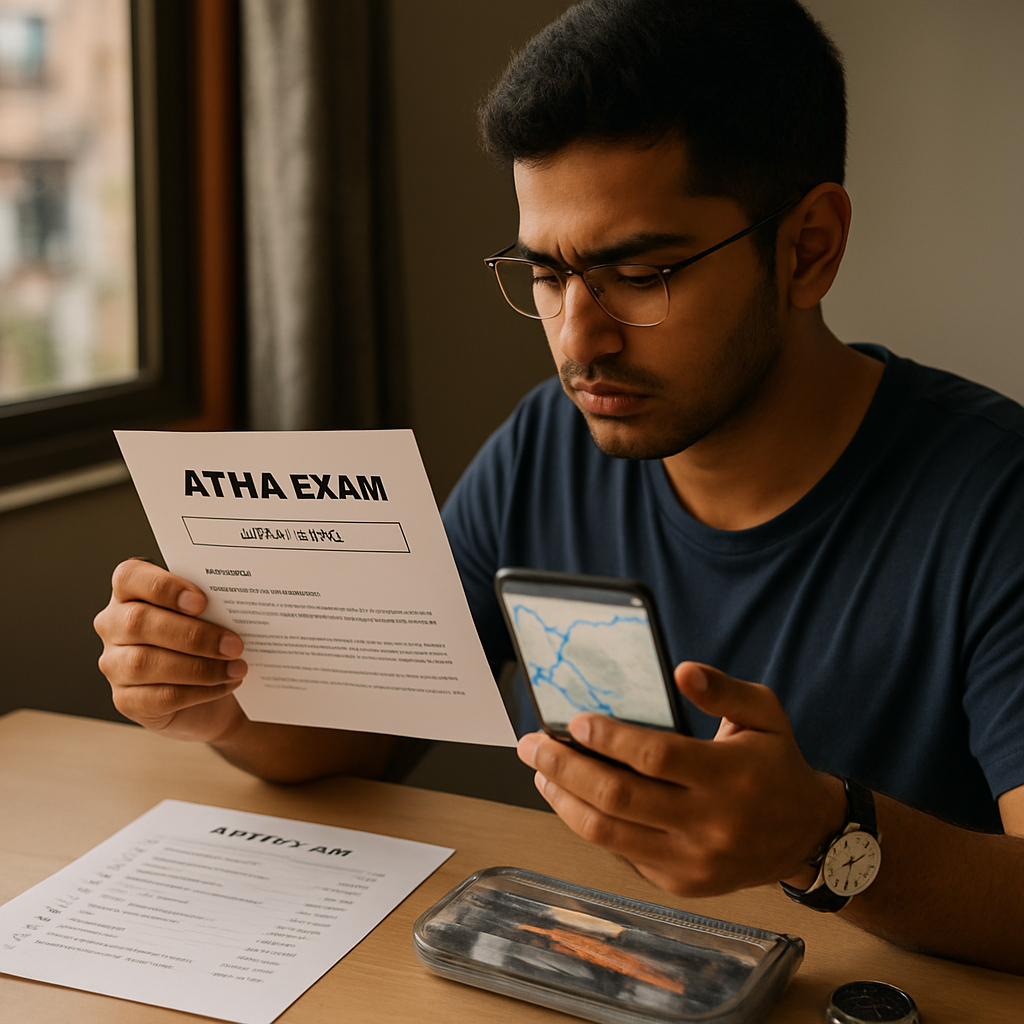
Read the full address rather than relying on the centre name alone. Similar institution names, multiple campuses and separate entrances can make map results confusing. Check that your route matches the address in your latest official document. Note the reporting time, identification requirements and entry instructions as well. These checks help ensure you reach the correct ATMA test centre entrance.
Do not rely on details from a previous exam session or informal advice from other candidates. They may be useful for context, but they do not replace your current centre allotment. If the address or reporting instructions for your ATMA test centre are unclear, contact the appropriate official channel before exam day.
Key factors
1. Confirm the venue. Check the latest official communication and make sure the centre name, full address and exam date are correct. Follow updated instructions rather than an old message or saved draft. Keep a digital copy, but have a backup in case your phone loses charge or connectivity. Use the confirmed details for your ATMA test centre when checking the destination.
2. Plan the full route. Map your journey to the venue entrance, not just to the neighbourhood or campus. Include transfers and the final walk or drive. Check an alternative route in case of disruption, and choose a convenient place to pause and check directions. This makes the trip to your ATMA test centre easier to manage.
3. Allow extra time. Route estimates can change because of traffic, service interruptions, weather, queues or unfamiliar roads. Work backwards from the reporting time in your centre instructions, allowing time for delays and for finding the building. You do not need to arrive hours early, but leave enough margin to avoid rushing.
4. Choose suitable transport. If you are using public transport, check the first and last parts of the journey as well as the main service. If you are driving, find out where you can park or be dropped off. For a distant or unfamiliar exam city, arriving the day before may be more reliable than relying on a tight connection on the day.
5. Prepare your documents and essentials. Follow the instructions for your session about accepted identification, printed materials and restricted items. Set aside everything you need the night before and check that the details are consistent where relevant. Avoid unnecessary belongings that could slow you down or create storage problems.
6. Make a backup plan. Save the address and route for offline use if possible. Note an alternative transport option and keep your phone charged for navigation and essential calls. Be specific: knowing which station or pickup point to use is more helpful than simply deciding to find another route.
An exam-day example
Imagine a candidate who selected the right exam city but did not check the final centre allotment. On exam morning, they follow an old saved location, discover that the venue is elsewhere and lose time changing course. The problem is not a lack of effort, but confusing the initial city choice with the confirmed destination. Checking the ATMA test centre in the official documents would have helped avoid this mistake.
Now imagine the same journey with better preparation. The evening before, the candidate checks the official address, compares it with the planned route, estimates the travel time and sets out the required documents. When a delay affects the preferred route the next morning, they already know the alternative and can adjust without having to plan from scratch.
The goal is to travel at a steady pace. Allow enough time for ordinary delays, but keep the plan practical. At the venue, follow the centre instructions rather than guessing which entrance, waiting area or check-in point to use. If staff give directions, follow their guidance.
Travel planning does not need to be complicated. Verify the venue, plan the route, allow extra time, pack what you need and leave on schedule. Reviewing this sequence once is more useful than repeatedly checking uncertain travel estimates on exam morning.
Conclusion
Finding an ATMA test centre means more than entering a city name in a map. Check the allotted address in your latest official documents, distinguish the city selection from the centre allotment, and plan the full journey to the correct entrance.
You cannot prevent every delay, but preparation can reduce surprises. With the venue confirmed, the route planned and the centre instructions followed, travel becomes a manageable part of exam day rather than its biggest challenge.