
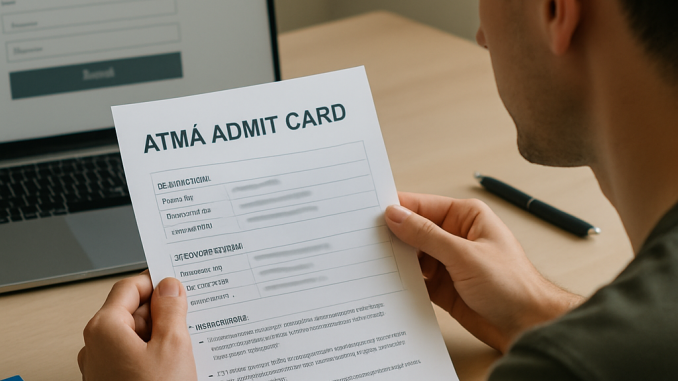
ATMA Admit Card Guide: How to Download It and Check Exam Details
Introduction
An admit card links your application to a specific ATMA exam session. Your ATMA admit card confirms key details, such as the exam date and centre, and explains what you need to bring to enter the venue.
The process is simple, but small oversights can cause unnecessary stress. A missed notice, an unchecked address or incorrect candidate details can distract you on exam day. Treat the ATMA admit card as an important part of your preparation, not just a document to download.
Procedures may change between exam cycles, so always follow the latest official instructions. This is especially important for release dates, login details, printing and accepted identification.
The candidate and the admit card
The admit card connects your application to a particular exam session. Use the ATMA admit card to confirm that the details match your application and the current schedule.
Go to the official ATMA examination portal and find the admit-card section for your exam cycle. Follow the login instructions provided there to complete the hall ticket download. The required credentials may change, so don’t assume those from an earlier cycle will still work.
Download or print the card using the portal’s options, then save the file somewhere easy to find. Once the ATMA admit card is downloaded, open it to check that every page is clear and that it shows the correct candidate and exam session. Downloading the card alone isn’t enough; you also need to verify its details.
Don’t alter the downloaded file. If you find an error on the ATMA admit card, compare it with your application and report the discrepancy through the examination authority’s stated process. Don’t try to correct it yourself or make a handwritten change.
What to check
Start with the identity details. Check your name, registration or application number, photograph and any other candidate information. Compare the ATMA admit card with your application and report spelling errors, an unclear photograph or missing details before exam day.
Check the date, session or shift, reporting time and entry deadline. The reporting time may differ from the exam start time, so follow the wording on your admit card and in the latest official notice.
Read the centre details on your ATMA admit card carefully, including the full address and any building or location information. These exam centre details are important, so don’t rely on the name of the area alone. If you’re unfamiliar with the location, plan your journey in advance using reliable, up-to-date travel information and allow extra time for delays. Don’t assume late entry will be allowed.
Next, check the entry requirements on your admit card and in the current exam notice. Confirm which documents you need, whether you must bring a printed card and which items are restricted. Requirements can vary by exam cycle, so follow the instructions for your session.
Pay particular attention to the rules for identity proof, photographs, stationery, electronic devices, bags and personal belongings. Bring only permitted items. If instructions are unclear or seem inconsistent, contact the authority through its stated support process before exam day.
Finally, check the card’s condition. Make sure the text, photograph and instructions are legible, and that no pages are missing or cropped. Keep the card with any other required documents, and store a secure digital copy separately as a backup.
On exam day
Prepare the evening before. Set aside your ATMA admit card, the identification documents listed in the instructions and any permitted items. Check the route, travel time and centre address, and plan to leave early enough to account for delays.
When you arrive, check that the centre matches the address on your card before joining a queue. Keep your documents ready for inspection and follow staff directions. Don’t rely on your phone for information if electronic devices are restricted at the venue.
Staff may compare your admit card with your identification or carry out other checks. Follow the current instructions and the directions of venue staff.
If a problem arises, such as a missing card, incorrect personal details or difficulty finding the centre, stay calm and use the official support or on-site process. Don’t assume that a screenshot, an older card or a verbal explanation will be accepted instead of the required document.
Use your exam-day checklist for a final check, not as a last-minute search at the door. Your admit card, identity documents, travel plan and knowledge of the entry rules each serve a different purpose. Checking them in advance can prevent an overlooked detail from disrupting your day.
Conclusion
Downloading your ATMA admit card is only the first step. Check your identity details, read the schedule carefully, confirm the centre address and review the entry requirements for your exam cycle.
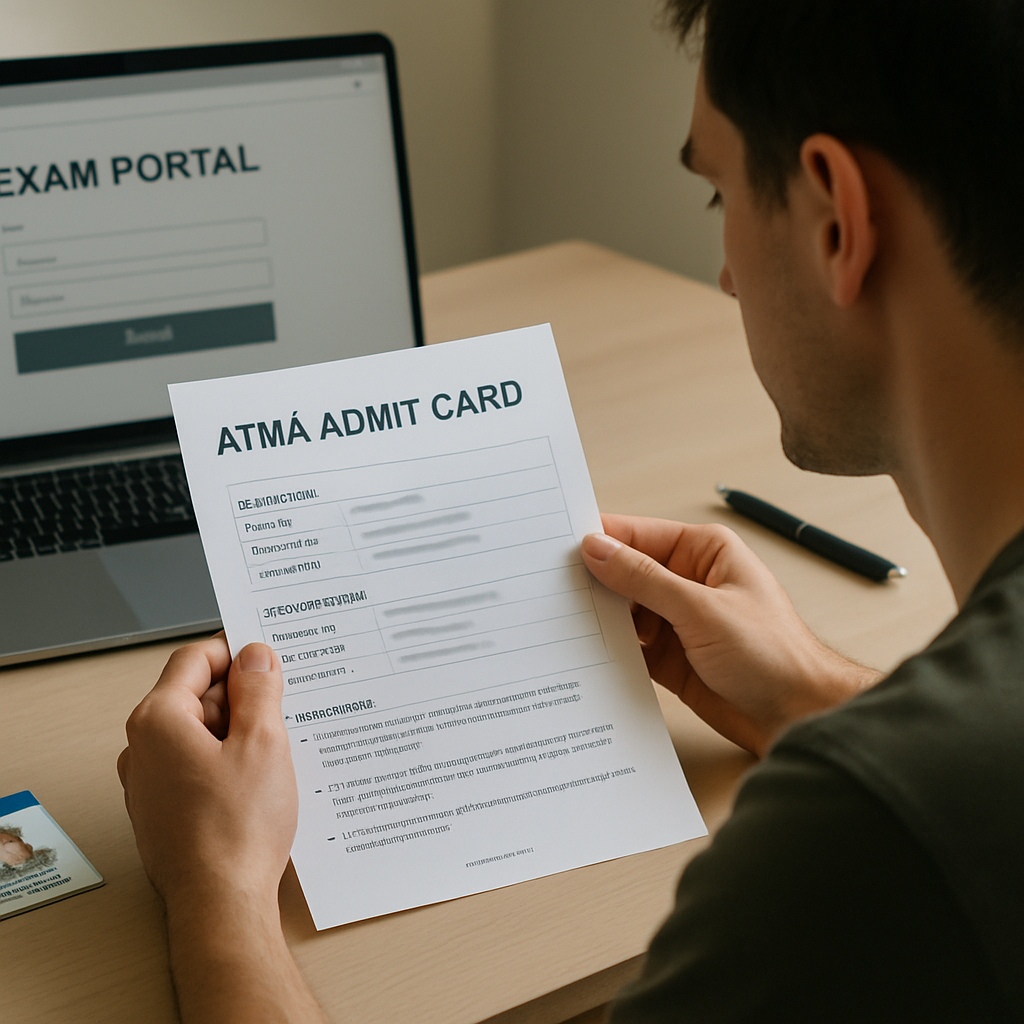
Doing this early makes the process easier and reduces avoidable uncertainty. The card can’t guarantee a smooth exam day, but careful preparation will help you arrive ready and follow the rules.