

ATMA Exam 2026: Eligibility, Exam Pattern, Important Dates and Application Timeline
Introduction
For management applicants, preparation and timing both matter. Missing a deadline can be as costly as performing poorly in one section. ATMA (AIMS Test for Management Admissions) is used by participating institutions as part of their admission process.
For 2026 applicants, it is important to distinguish the general process from details that still need confirmation. Eligibility rules and the broad test format can help with planning, but dates and specific requirements should be checked in the official notification.
This guide covers ATMA 2026 eligibility, exam structure and the application process. Always check the instructions for your chosen test session and institution.
Eligibility and exam pattern
ATMA 2026 eligibility generally requires a bachelor’s degree from a recognised institution. Final-year students may also be eligible, depending on the applicable rules. Check the official notice to confirm ATMA 2026 eligibility before applying.
For ATMA 2026 eligibility, review the 2026 notification for minimum marks, final-year requirements, documents and any category-specific provisions. Participating institutions may also set their own admission criteria, so ATMA 2026 eligibility for the test may differ from eligibility for a particular programme.
It helps to consider eligibility in two stages: eligibility to take the test and eligibility for admission to a particular programme. Meeting the first does not necessarily mean you meet a college’s academic or documentation requirements. Confirm that your circumstances satisfy ATMA 2026 eligibility as well as the requirements of each institution.
The ATMA exam tests analytical reasoning, verbal skills and quantitative skills. The ATMA test structure commonly includes six timed sections, with each skill area covered in two sections. Understanding the ATMA exam pattern can help candidates plan their preparation for this management entrance exam.
Previous formats have included 180 questions over three hours. The number of questions, section timings, marking scheme and any penalty for incorrect answers may change, so confirm the details in the instructions for your test session. Reviewing the latest ATMA test structure is also useful when checking ATMA 2026 eligibility and session requirements.
Section timings affect how you manage the test. Spending too long on a difficult calculation, for example, may leave less time for easier questions in another section.
Important dates and preparation
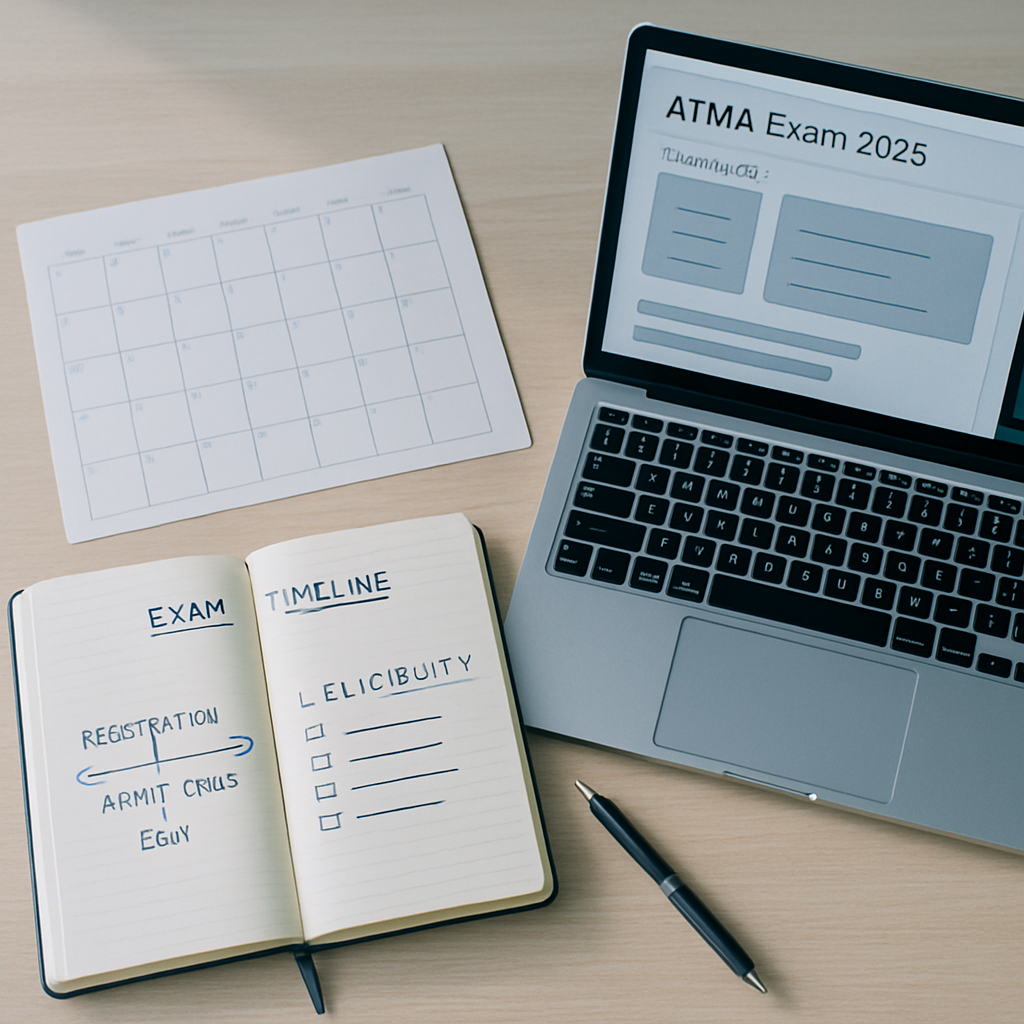
The schedule is one of the most important details to confirm. ATMA important dates may cover registration, payment deadlines, admit-card availability, the test and result announcements. Check the official notification for the ATMA application timeline for your chosen session.
Do not treat any 2026 dates as confirmed unless they appear in an official notification for your session. ATMA may be held in multiple sessions, so dates for one sitting may not apply to another. Keep your ATMA 2026 eligibility documents and session details ready while monitoring the ATMA important dates.
A typical application sequence is to check the official announcement, choose a session, complete registration and payment, save your confirmation details, follow the admit-card instructions, take the test and then track the result and college admission process. Use this sequence to organise your ATMA application timeline and make sure your application meets ATMA 2026 eligibility requirements.
Allow time for each step rather than waiting until the deadline. Payment confirmation, photo or identity-document requirements, and form corrections can cause problems if left to the last minute. A careful review of ATMA 2026 eligibility before submitting the form can help prevent avoidable delays.
Preparation is just as important. The test requires a balance of verbal, quantitative and analytical skills, along with the ability to work under time pressure.
A diagnostic practice test can help identify what to improve. If your accuracy is good but you attempt too few questions, work on pacing and question selection. If you attempt many questions but make frequent errors, focus on checking your work and revising specific topics.
Scoring rules should guide your approach. If the session uses negative marking, random guessing can cost you points. If you can confidently eliminate some options, an informed attempt may be worthwhile. Check the current bulletin rather than relying on an older guide.
Your ATMA score is only one part of the admission process. Institutions set their own selection criteria, so check the requirements for each programme separately and confirm how they relate to ATMA 2026 eligibility.
Example application scenario
Consider a candidate who is nearing the end of a degree and wants to apply to a management programme. First, they should confirm that their academic status and marks meet ATMA 2026 eligibility rules, then check whether the institution accepts the ATMA session they plan to take.
Next, they need to verify the schedule. Relying on dates from a previous year could lead to missed deadlines, a different test window or a conflict with the institution’s application timeline. The official session notice should guide the plan and help candidates follow the ATMA application timeline.
During the test, managing all six sections matters more than excelling in just one. Candidates who keep track of time, move on from difficult questions and maintain accuracy across the different skills are better positioned to perform well.
After the test, candidates should track the result and each college’s admission process. Meeting an exam threshold does not necessarily complete an application to a participating programme.
Conclusion
Approach ATMA 2026 one step at a time: confirm your ATMA 2026 eligibility, check the current exam format, register for the right session and practise working under time pressure. Use the general framework to plan, but verify eligibility rules, scoring and deadlines in the official 2026 instructions.
A reliable plan matters as much as preparation. Avoid assumptions based on previous years, follow the application steps carefully and work on both speed and accuracy.