
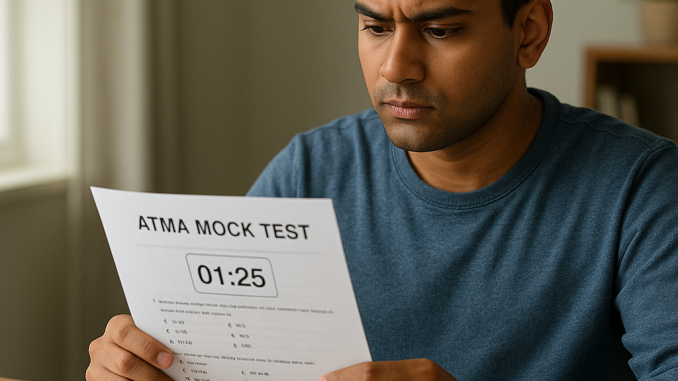
ATMA Sample Papers and Mock Tests: How to Practise Effectively
Introduction
Preparing for an entrance test can seem simple: solve questions, check your score and repeat. But practice is useful only when it improves your next performance. An ATMA sample paper is more than a set of questions. It helps you practise making decisions under pressure, balancing time, accuracy and composure.
Approach each paper in stages. First, establish a baseline. Then identify where you are losing marks and test whether a specific change helps under timed conditions. A high score is encouraging, but a reliable approach is more valuable. Use an ATMA sample paper to measure your starting point and set a clear goal for each subsequent attempt.
Familiarity can hide weaknesses. Recognising a question type does not mean you can solve it efficiently, and finishing a paper does not prove your pace was sustainable. Effective practice helps you see the difference. Reviewing an ATMA sample paper closely can reveal whether your habits are helping or holding you back.
Understanding the test and your approach
Every practice session involves two things: the demands of the paper and your own habits. The paper tests reasoning, language and quantitative skills; you bring your strengths, blind spots and preferred pace. The goal is to understand how they interact, not just to chase a higher score.
Start with one ATMA sample paper under conditions similar to the actual test. Follow the latest official instructions for timing and format rather than relying on an older guide or coaching schedule. Record your score, how long each question took and whether you used a clear method or guessed.
Treat your first attempt as a starting point, not a verdict. An uneven result may point to gaps in your knowledge, but it may also reflect poor pacing or changing correct answers without good reason. Each cause calls for a different response, so identify the problem before making a study plan. Keep your ATMA sample paper results alongside these notes so you can compare attempts consistently.
Previous-year papers can help you understand how management-entrance questions are presented, but papers for other exams should be supplementary. For example, MAT previous-year question papers and their exam-preparation context can provide a useful comparison. Keep your ATMA preparation focused on relevant materials and current guidance.
Key factors
Choose materials with a purpose. An ATMA sample paper is most useful when its level and format match what you need to prepare for. Use topic-based practice questions to address specific weaknesses, and full papers to see whether you can apply those skills across mixed topics under time pressure.
Make timing part of your strategy. Timed test practice should help you recognise when a question is taking too long. Set a reasonable limit for your first attempt, move on if you cannot see a clear method and return later if time allows. The goal is not to rush, but to leave enough time for questions you can answer accurately.
Review your decisions, not just the answers. After each paper, sort questions into four groups: correct and confident, correct but uncertain, incorrect despite knowing the method, and incorrect because you lack the underlying concept. This question analysis helps distinguish reliable strengths from lucky guesses and shows what to practise next. Apply the same review to every ATMA sample paper you complete.
Look for patterns across attempts. One score may not tell you much. Compare several papers and note whether errors cluster around a topic, a question type or the final part of the test. If your accuracy drops near the end, pacing or stamina may be the issue. If the same concept keeps causing trouble, focus your revision there. Comparing your ATMA sample paper attempts makes these patterns easier to spot.
Learn from mistakes. For each missed question, note why you got it wrong and what you could do differently next time. Then try a few similar questions without looking at the explanation. Score improvement comes from applying what you learn, not simply hoping for a better result.
Keep practice conditions realistic. A mock test taken while distracted, repeatedly paused or completed with help will not give you a reliable measure. Use a consistent setting and only permitted materials. Avoid taking full tests so often that you have no time to review them. Alternate between practice tests and focused work on weaknesses.
The exam-day scenario
Imagine starting a full mock with a clear plan: scan the questions, answer those that suit your strengths and avoid letting one difficult problem set the pace. In the opening section, you work through familiar questions and mark uncertain ones to revisit. You are not relying on speed alone; you are choosing where to spend your time.
Midway through, a difficult question leads to repeated calculations. You check whether there is a simpler approach, then move on when there is not. That may feel like giving up, but it leaves more time for questions you can answer with confidence.
Near the end, you return to selected questions instead of trying every unanswered one. Your review shows that some errors came from misreading instructions, while others point to a gap in a particular topic. Your next study session can focus on both: improve your reading habits, review the concept and test those changes in a fresh ATMA mock test.
This example shows why practice is about more than completing tests. A paper can reveal a tactical mistake even when you know the material, and a modest score can still offer useful information if you review it honestly. Use that information to guide your next attempt rather than responding with frustration or a vague promise to work harder. A fresh ATMA sample paper can help you check whether your revised approach works.
Conclusion
Effective preparation has three parts: simulate the test, review your performance and work on your weaknesses. An ATMA sample paper provides the practice, but careful review is what turns it into learning. Without that step, you may repeat the same mistakes in different papers.
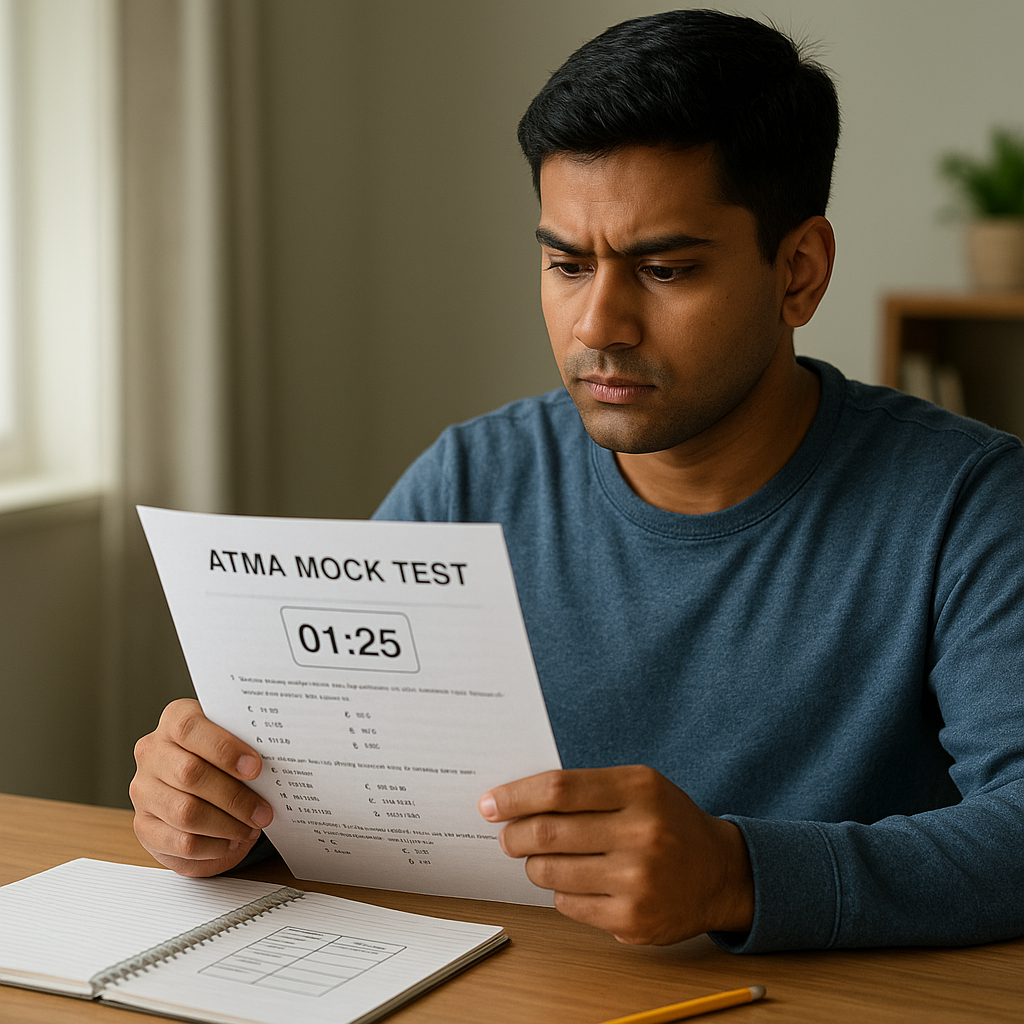
Build a steady routine of focused drills and full mocks. Track your results, look for patterns and make one or two specific changes at a time. You do not need every practice session to go perfectly. The goal is to arrive on test day with a reliable pace, a clear strategy for difficult questions and fewer avoidable errors.